aerospace Feb 23, 2026
Objectives
To build a stable airplane that will fly the farthest.
Guiding questions
- How does the position of the Center of Gravity (CG) affect glide stability and distance?
- How does the wing aspect ratio (length/width) affect the lift and drag?
- What effect does the vertical stabilizer have on maintaining stability?
- How do adjustments to the horizontal stabilizer angle affect the pitch stability?
- What modifications can be made to the airplane to reduce drag without significantly compromising lift?
Materials
- Balsa Sheet (1.5x75mm x 915mm) (1 pc)
- Balsa Strut (5x5x50mm) (1 pc)
- Hot Glue or Standard Wood Glue
- Cutting knife
- Ruler
- Cutting board
- Rubber bands (2 pcs)
Balsa wood is selected as the primary construction material due to its exceptionally high strength-to-weight ratio. Despite having a density as low as 100–200 kg/m³, balsa maintains sufficient structural rigidity to withstand aerodynamic loads during flight. This allows the aircraft to achieve minimal wing loading while preserving structural integrity. Additionally, balsa is way easier to cut than other materials, which enables precise configuration design during construction.
How does the grain affect the airplane building?
When working with a sheet of balsa wood, cuts made parallel to the grain tend to proceed smoothly with less resistance. In contrast, cuts made perpendicular to the grain generally require substantially greater effort. These findings indicate that the compressive strength of balsa wood is significantly greater along the longitudinal grain axis. During flight, the main wing structure is subjected to distributed aerodynamic lift forces acting along its span, inducing bending moments about the wing root. When the wood grain is oriented parallel to the spanwise direction, that is, perpendicular to the fuselage centerline, the structure demonstrates enhanced resistance to bending deformation. Conversely, when the grain orientation is perpendicular to the primary loading direction, the interlaminar shear strength is reduced, rendering the structure more susceptible to flexural deformation and potential failure.
Building process
First, I cut out 3 balsa pieces and prepared a wooden stick as shown in Figures 1 and 2.
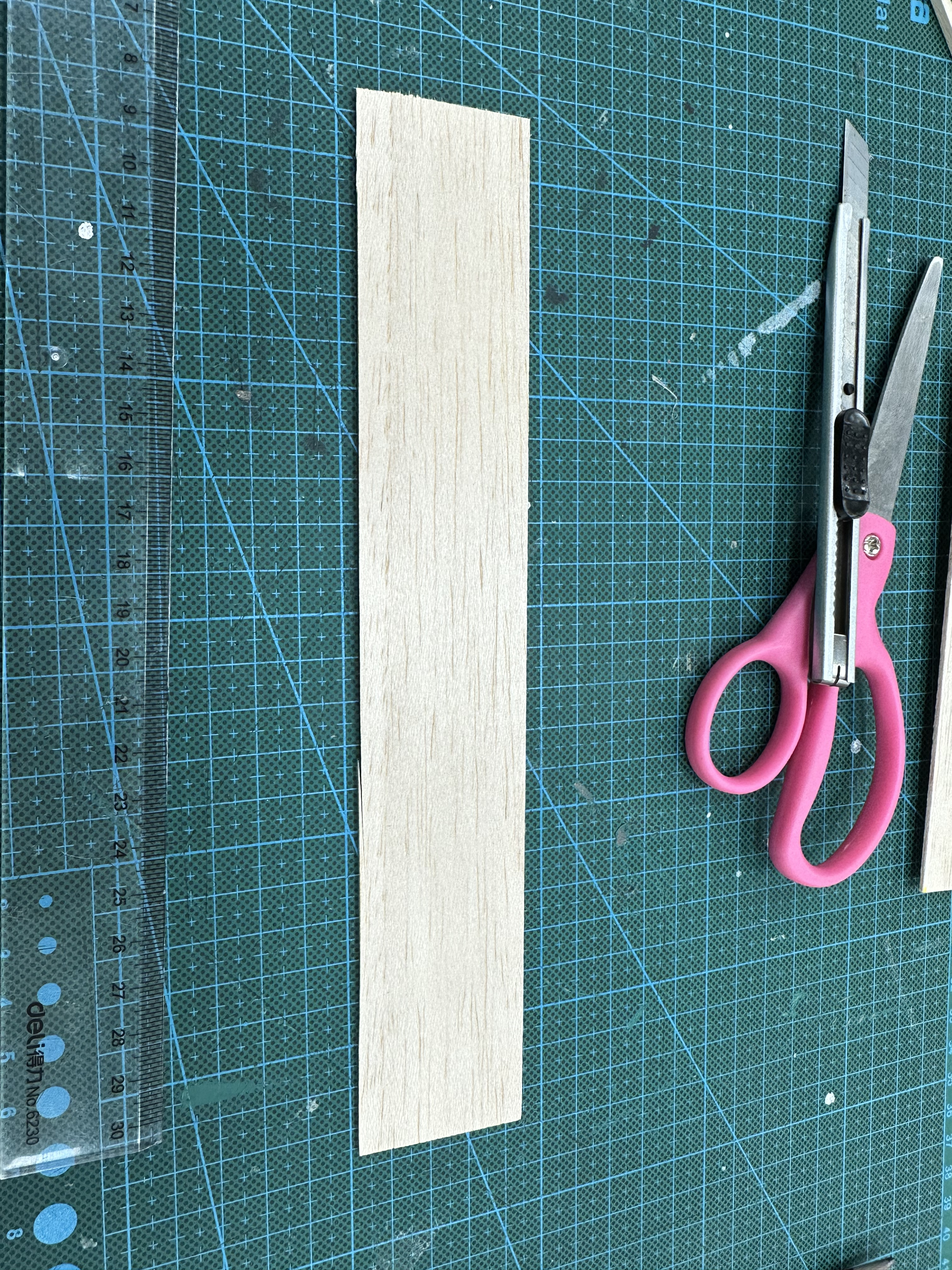
Figure 1: Raw Materials (Section)
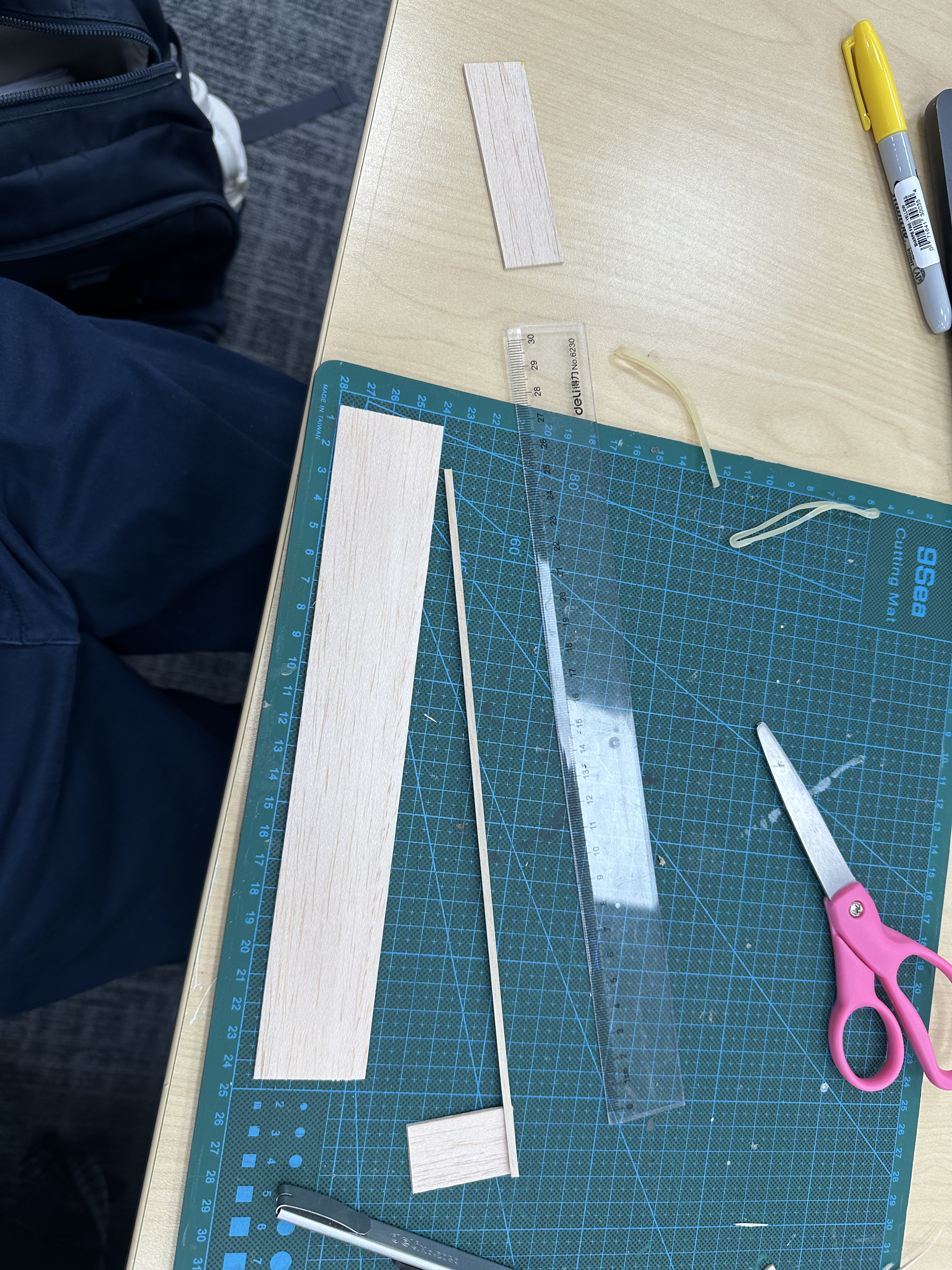
Figure 2: Vertical Stabilizer Assembled
2 rubber bands were used to fasten the main wing and the horizontal stabilizer on the fuselage.
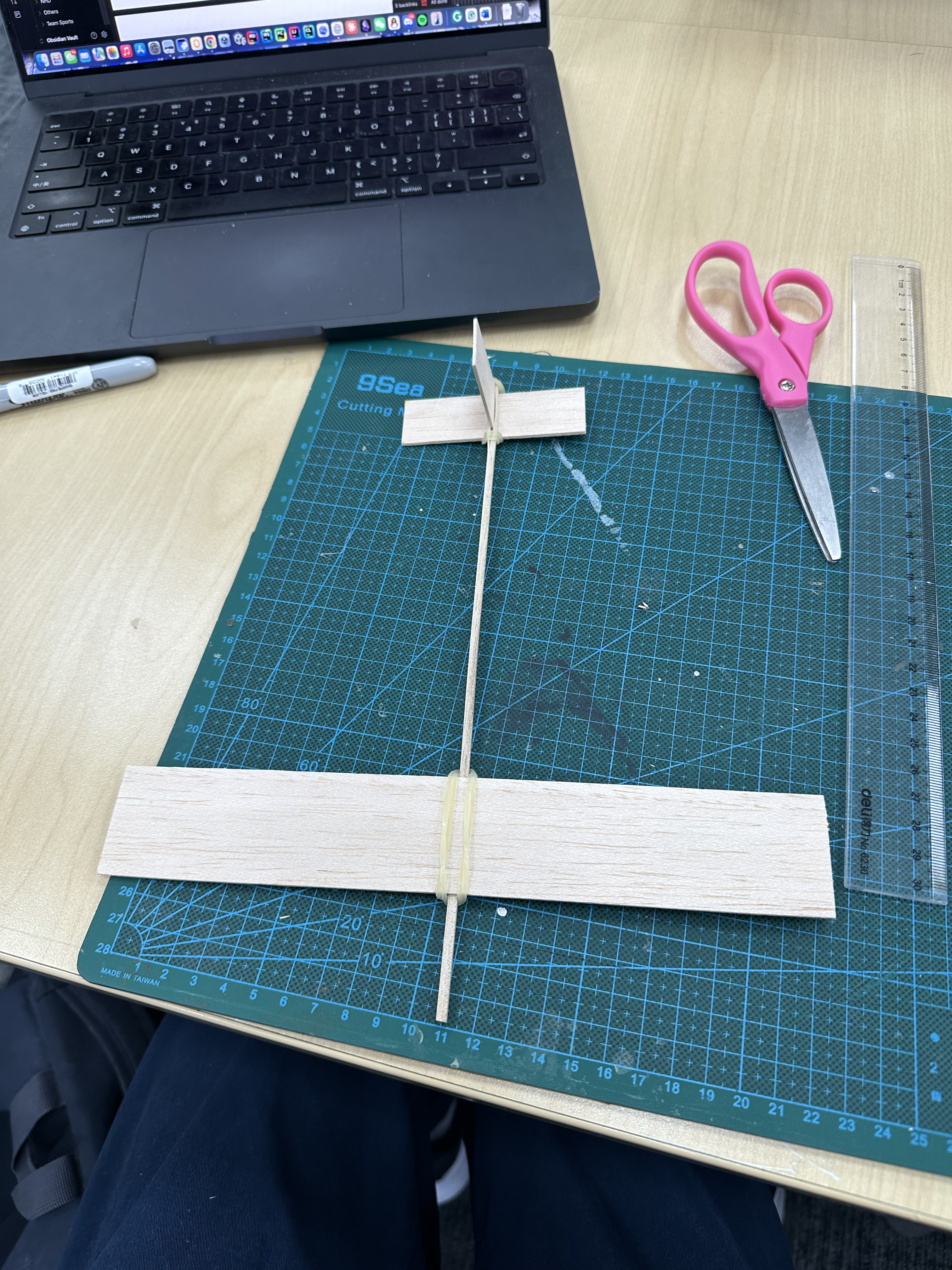
Figure 3: Wing and Stabilizer Assembled
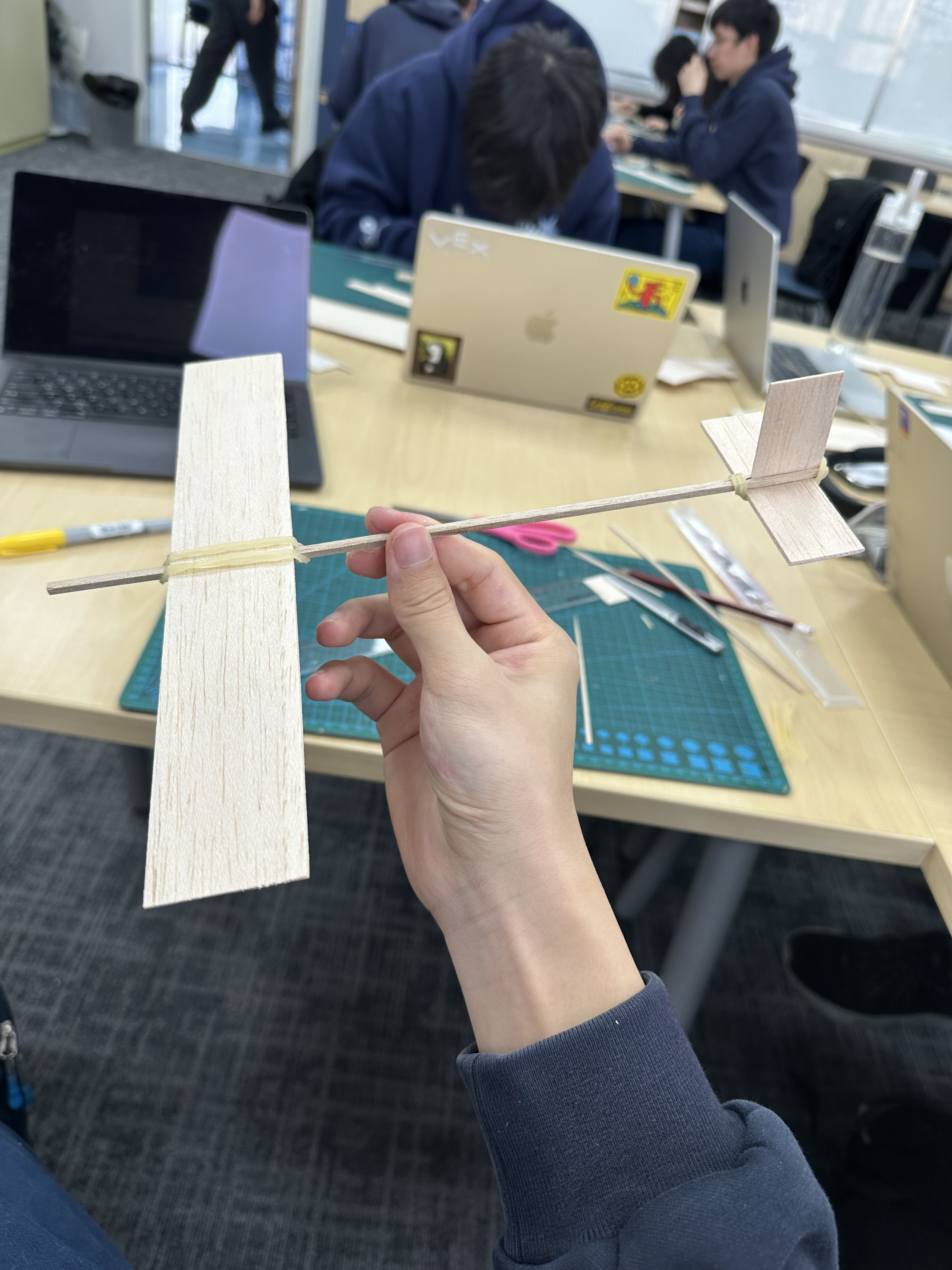
Figure 4: Final Step Before Adding Blu-Tack
Final Product
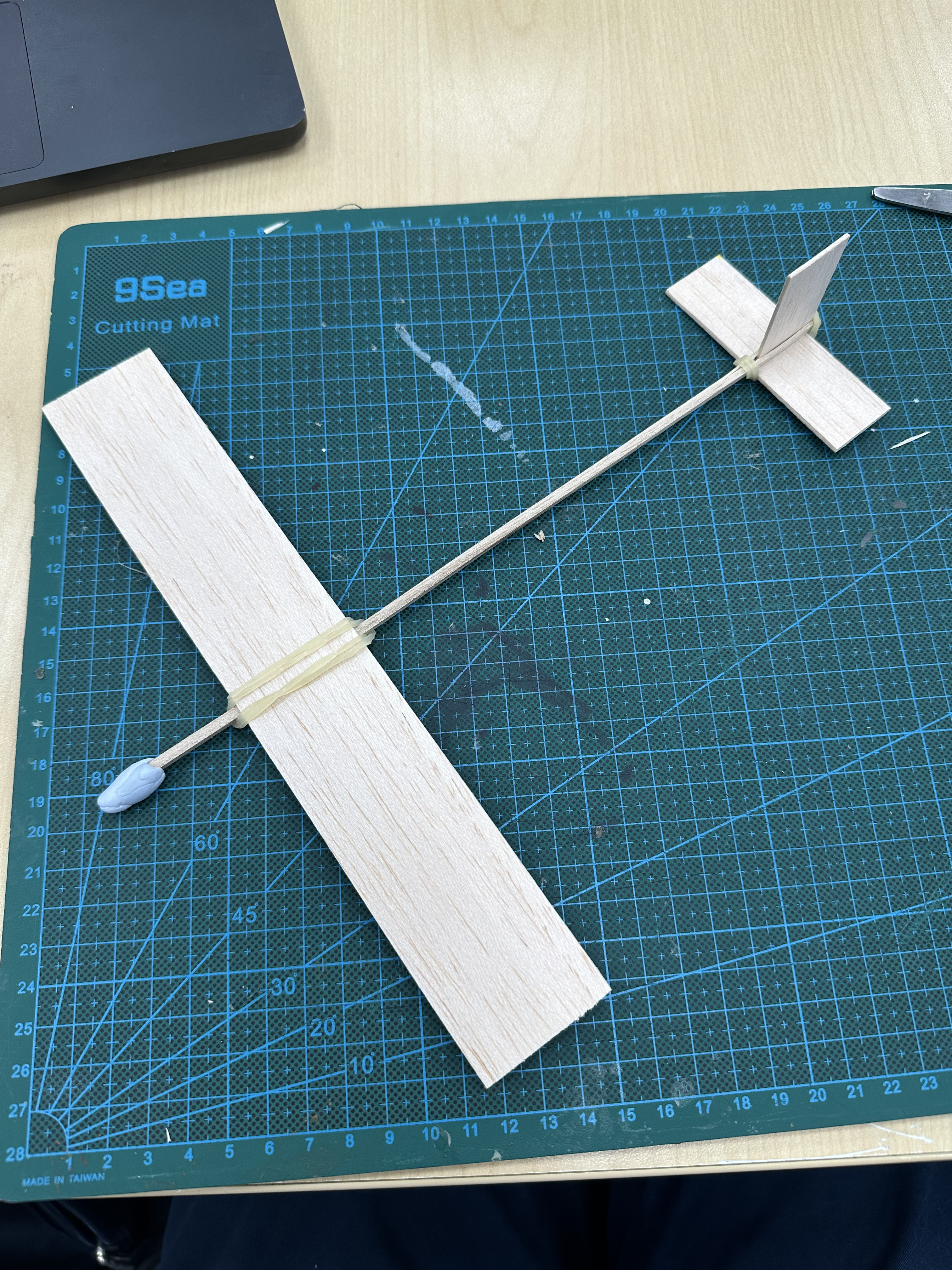
Figure 5: Airplane Top View 1
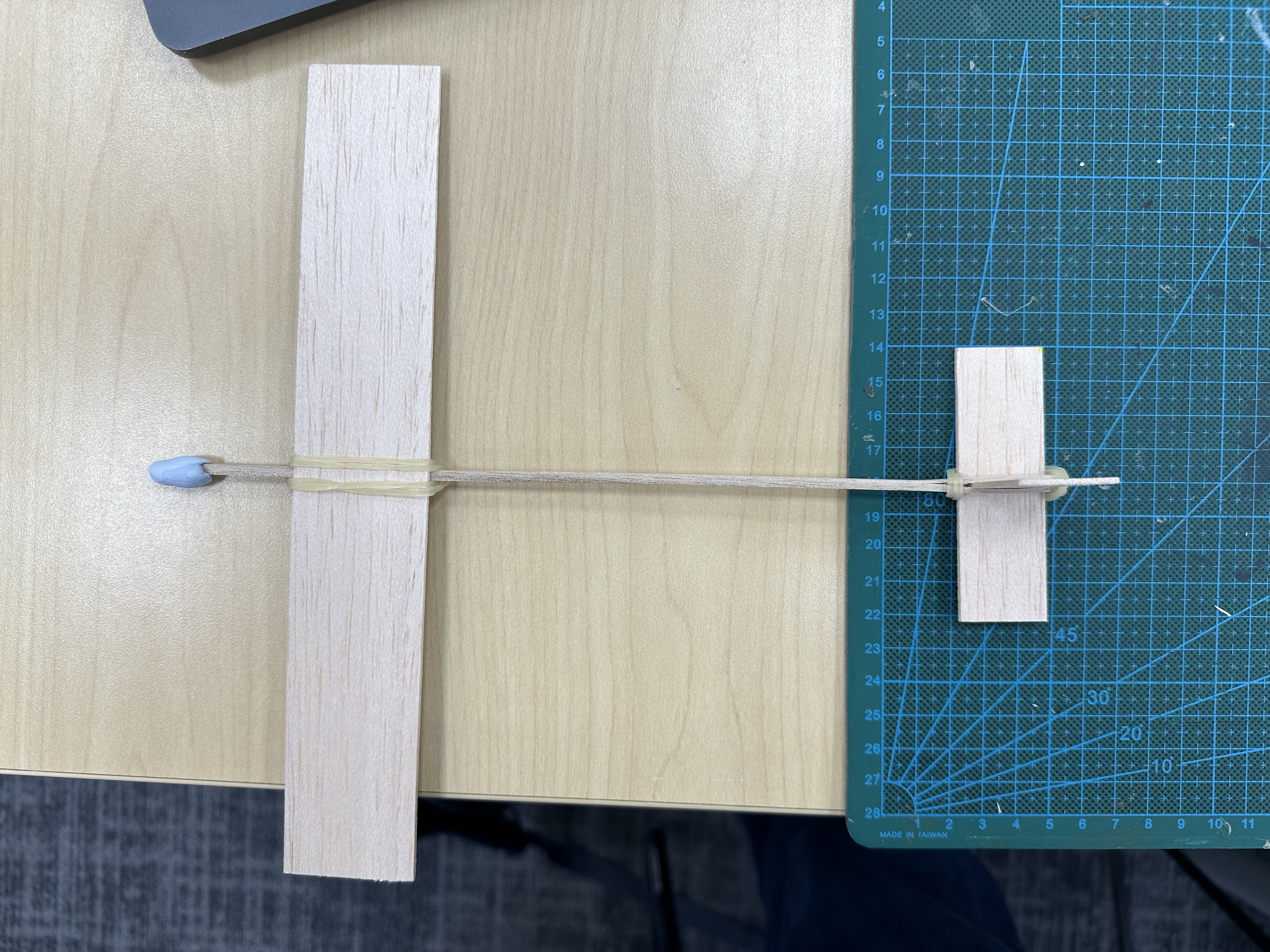
Figure 6: Airplane Top View 2
Size Data
Wing:
Horizontal Stabilizer:
Vertical Stabilizer:
Balancing
An additional balsa wood stick was utilized to determine the center of mass of the aircraft, ensuring equilibrium along both the fuselage axis and the spanwise direction of the main wing. The center of mass was found to be positioned along the longitudinal centerline of the aircraft, slightly aft of the main wing.
.png)
Figure 7: Center of Mass Measurement
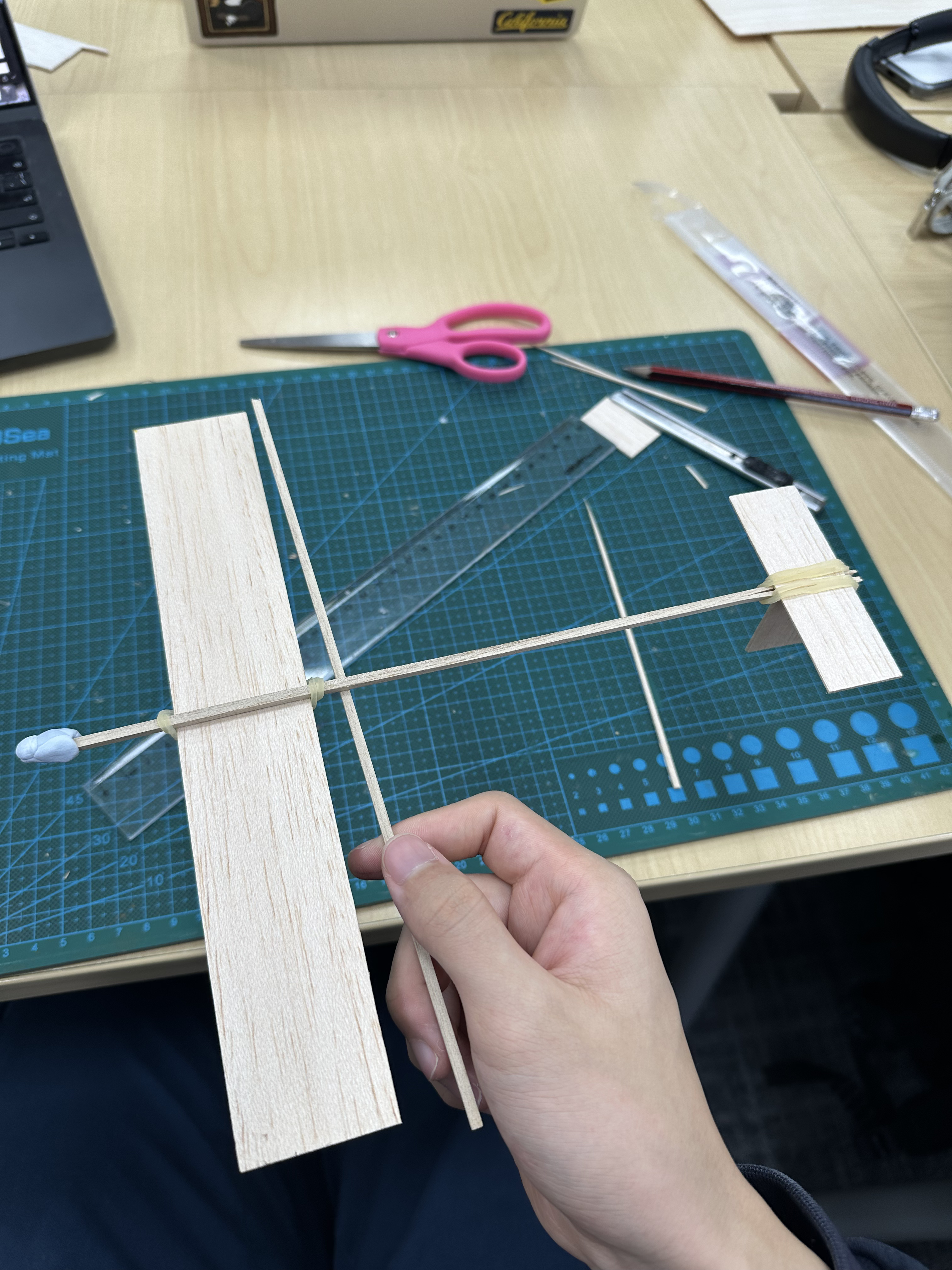
Figure 8: Center of Mass Along Fuselage Measurement
Initial structure
The aircraft is expected to maintain a brief period of level flight before experiencing a rapid loss of lift, resulting in an immediate stall to the ground.
Observations:
Trail #1
Upon release, the aircraft exhibits a pronounced pitching moment and reaches an angle of about 45 degrees above the groundlevel, leading to a stall immediately following the launch phase.
Analysis
Compared to physics, where objects are often idealized as point masses, engineering requires us to account for the effects of torque due to the actual geometry and mass distribution of components to make sure we are aware of the kinematics.
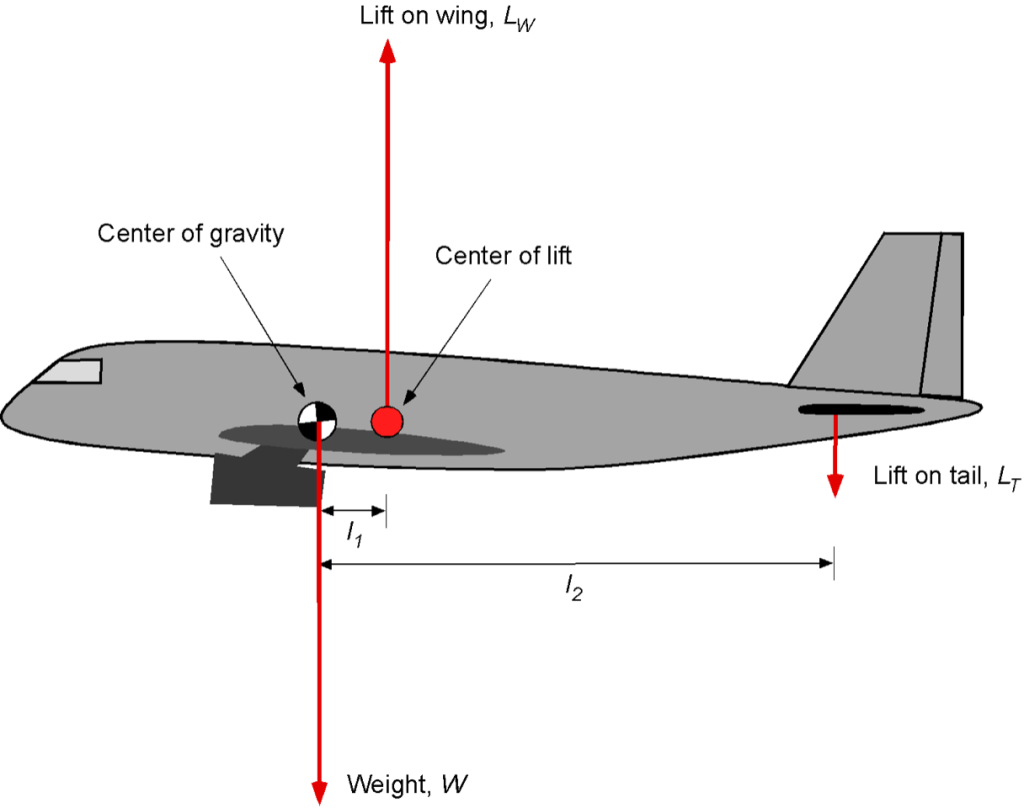
Figure 9: Free Body Diagram of Airplane
Center of Gravity (mass)
The center of mass depends solely on how mass is distributed within an object. It is an intrinsic property of the body itself, independent of external forces or reference frames. For gravitational analysis, the entire weight of an object can be treated as acting through this single point.
Center of lift
The center of lift is an aerodynamic property that depends on multiple dynamic factors
- Wing geometry: the shape, planform, and airfoil profile of the wing
- Airflow conditions: changes in airspeed, air density, and flow characteristics
- Flight variables: the center of lift moves in response to changes in angle of attack, airspeed, flap deployment, and wing configuration.
Because these factors are all variable during flight, the center of lift is inherently dynamic.
Center of Lift vs. Center of Mass
When the center of lift is behind the center of mass, the aircraft tends to pitch down, since the lift force acts behind the pivot point, pulling the tail up.
When the center of lift is ahead of the center of mass, the aircraft pitches up, as lift now pushes the front end upward.
Practical optimal structure
In a conventionally stable aircraft, the center of gravity (CG) is positioned forward, with the main wing’s center of lift located slightly aft of the CG. The horizontal stabilizer at the tail generates a downward balancing force to maintain trimmed flight.
This arrangement ensures longitudinal stability, so that if the aircraft experiences an up-pitching perturbation, the resulting aerodynamic moment produces a restoring pitch-down tendency, naturally correcting the deviation rather than allowing divergence.
Trail #2
In this configuration, the main wing was adjusted aft to reposition the center of lift further behind the CG, and additional weight (Blu-Tack) was applied to the nose to move the CG forward, in this case, enhancing longitudinal stability.
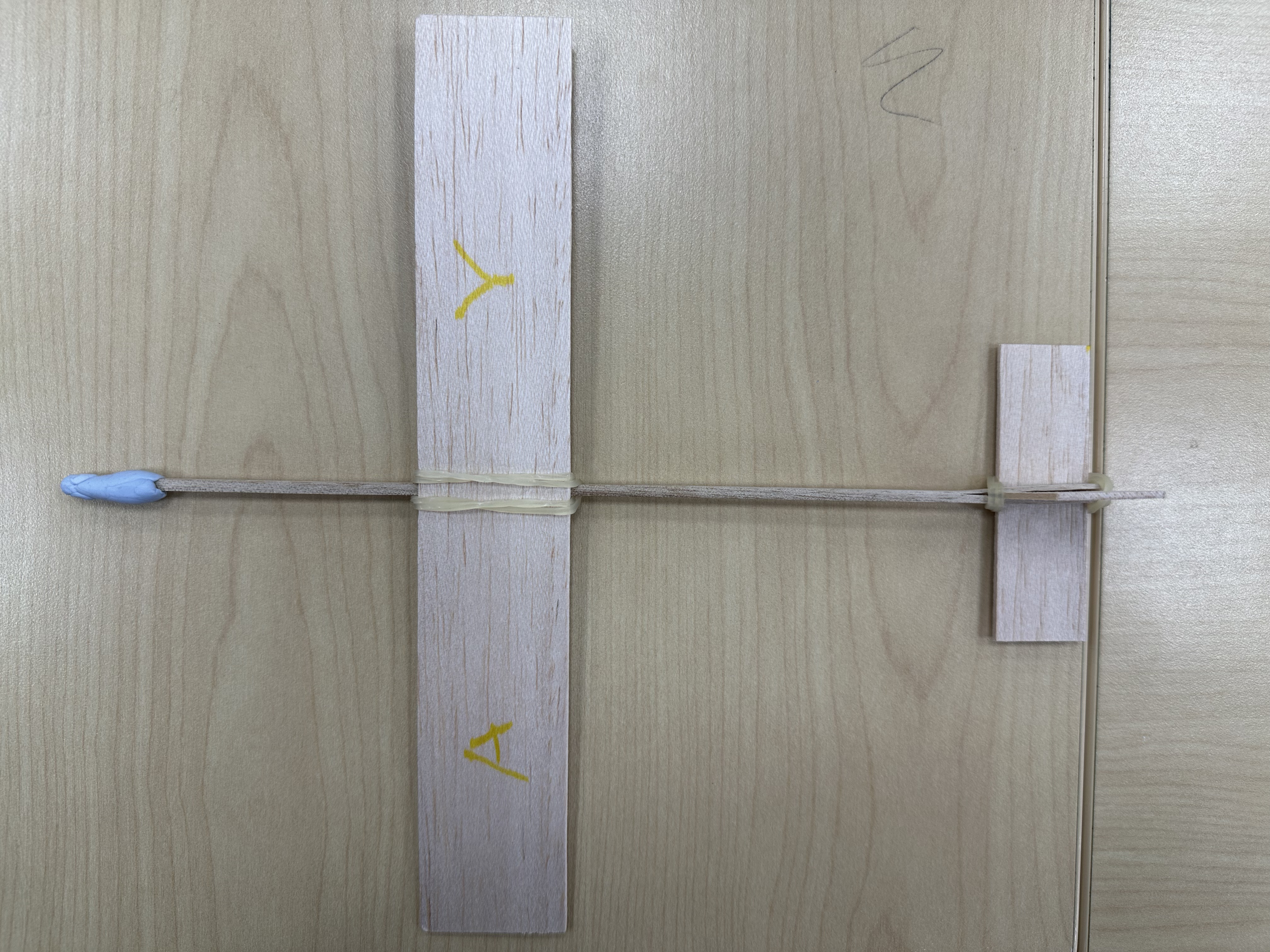
Figure 10: #2 Configuration
Following this modification, flight performance improved significantly, and the aircraft achieved a stable glide path with negligible pitching. However, the trim was not yet optimal, so further tuning of the structure was conducted to achieve a more precise longitudinal balance.
Trail #3
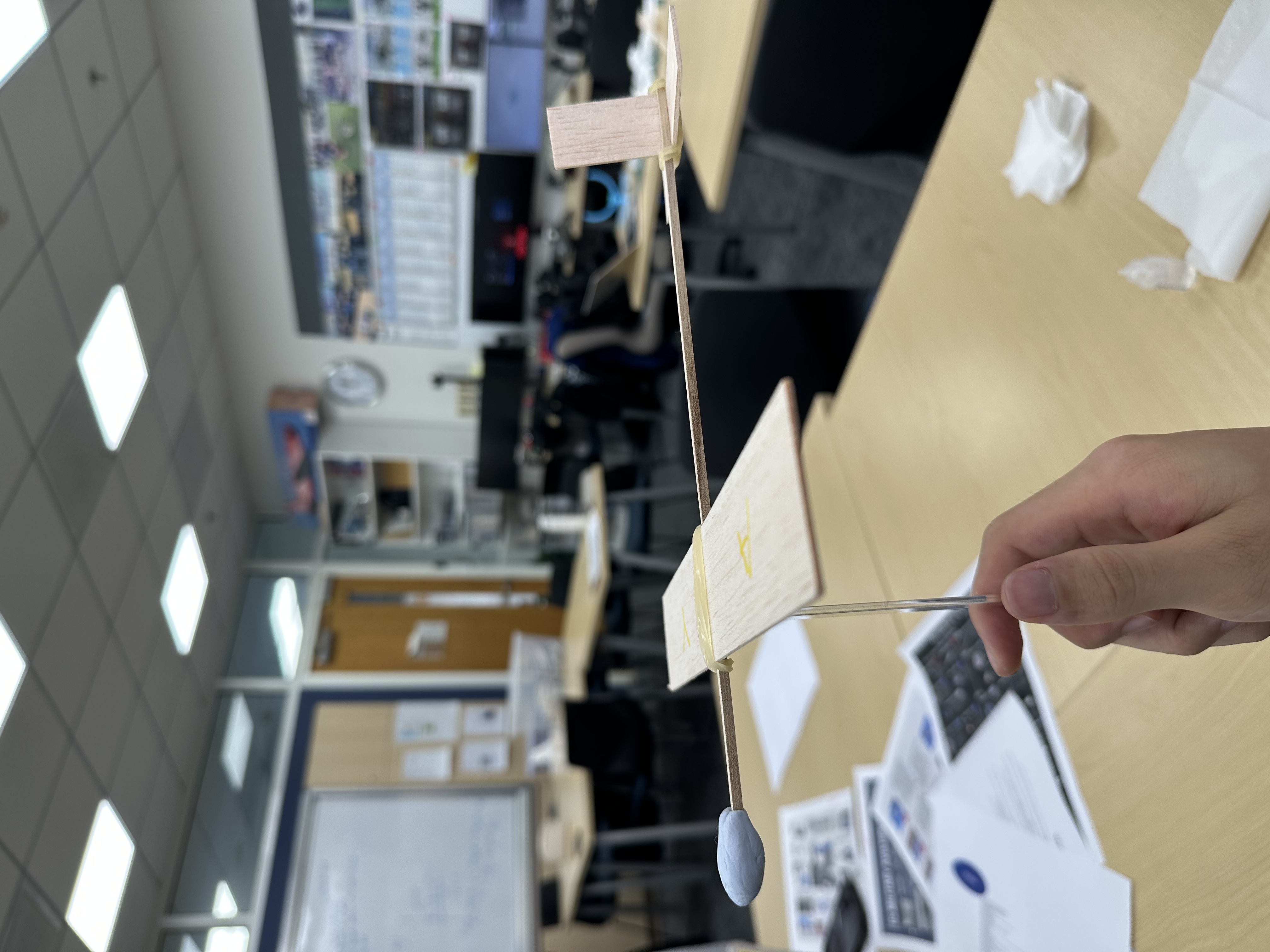
Figure 10: #3 Configuration CG locating
I moved the center of mass to a position around 35% back from the leading edge of the main wing. This is to make sure that the center of mass and the center of lift are distributed precisely.
Enhanced Balsa
Dihedral
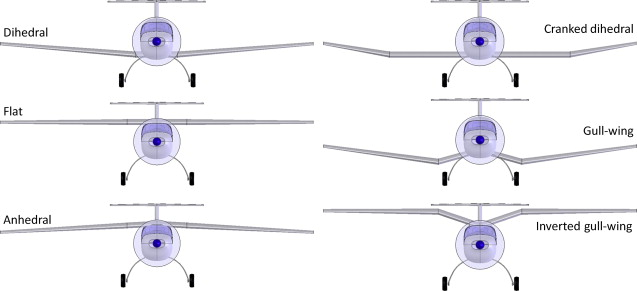
Figure 11: Schematic Diagram of Wing Configurations
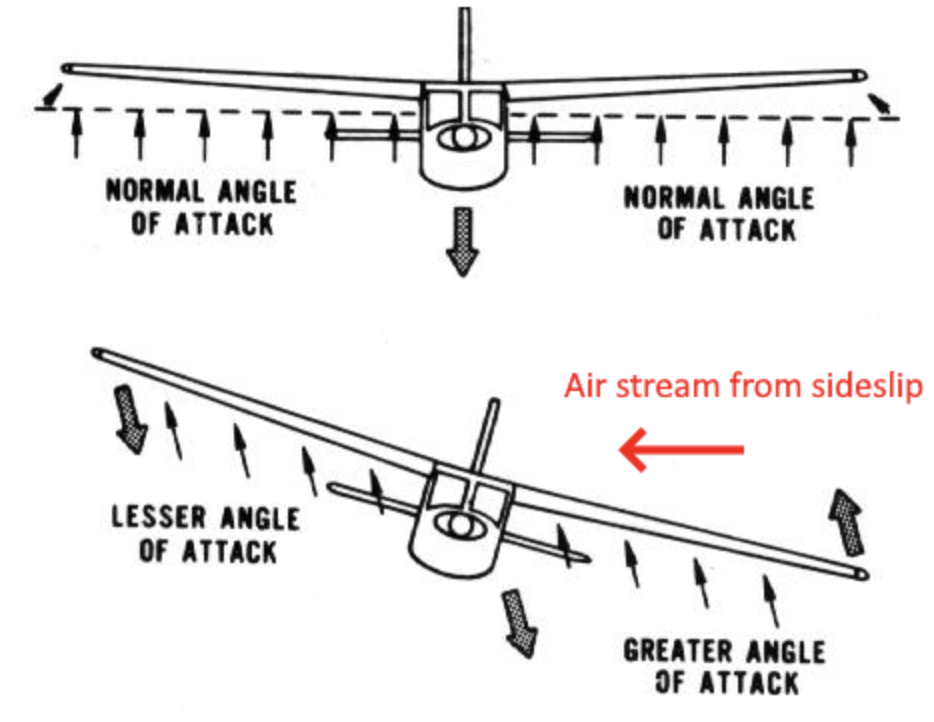
Figure 12: Schematic Diagram of Dihedral
When the aircraft sideslips toward the dropped wing, dihedral causes the lower wing to meet the airflow at a higher angle of attack as well as produce more lift, and the upper wing at a lower angle of attack as well as produce less lift. This lift asymmetry rolls the aircraft back to level.
Then the airplane rolls to the right
- The right wing becomes lower
- The left wing becomes higher
Because of changes in the airflow direction and the wing geometry, the lower wing usually gains a greater effective angle of attack and therefore more lift. As a result, the airplane is pushed back toward level flight.
The function of dihedral is to increase an aircraft’s lateral static stability in sideslip.
Sideslip & Dihedral Effect
The most important function of dihedral is to increase the aircraft’s rolling tendency to recover during a sideslip.
For example, when the airplane is pushed off course by the wind and enters a sideslip
- The relative airflow approaches from the side
- The dihedral causes the left and right wings to respond differently to this sideways airflow
- This then creates a rolling moment that tends to roll the airplane back
Advanced Design
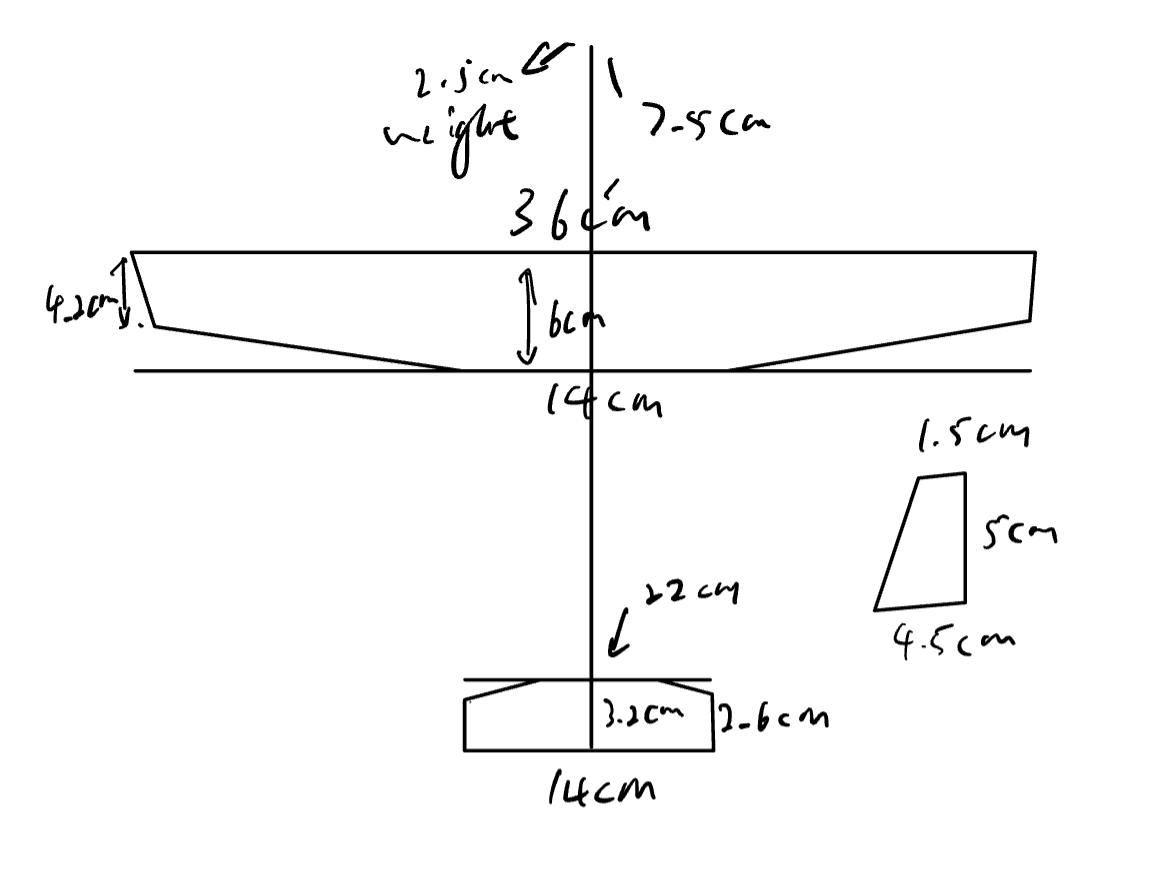
Figure 13: Enhanced Balsa Airplane Design
Dimensions
Main Wing
Wing total span: 36 cm
big enough for a good lift
not so large that it becomes floppy or twisty
Wing chord
6.0 cm center chord
Center panel: 14 cm span × 6.0 cm chord
Left tip panel: 11 cm span × 6.0 cm root chord tapering to 4.2 cm tip chord
Right tip panel: same as left
This gives a good aspect ratio, better lateral stability, and lower tip drag than a pure rectangular wing.
Wing area estimate
center panel area = 14 × 6.0 = 84 cm²
each tip panel area ≈ 11 × (5.2 + 4.2)/2 = 51.7 cm²
total wing area ≈ 187 cm²
Horizontal Stabilizer
Span: 14.0 cm
Chord
- 3.2 cm root
- 2.6 cm tip
Area
About 40–42 cm²
Vertical Stabilizer
Height above fuselage: 5.0 cm
Root length along fuselage: 4.5 cm
Tip chord: 1.5 cm
Area roughly 13–15 cm²
Fuselage
26.7 cm wooden stick as the main fuselage boom
Fuselage layout along the stick
Measured from the nose
0.0–2.5 cm: nose/ballast zone
7.5–8.5 cm: wing mount center
22.8–23.5 cm: horizontal tail leading edge
22.8–23.5 cm: vertical tail root front
Material Allocation
500 cm² total sheet area
Main wing
- 187 cm²
Horizontal stabilizer - about 42 cm²
Vertical stabilizer - about 15 cm²
Others - about 20–30 cm²
Total - Roughly 264–275 cm²
Reinforcement pieces
- 2 wing joint gussets: 2.5 cm × 1.5 cm triangles or diamonds
- 1 center wing doubler: 5.0 cm × 2.0 cm
- 2 tail mount tabs: 1.5 cm × 0.8 cm
- several trim tabs: 0.8 cm × 0.4 cm small strips
Airfoil
Since the balsa sheet is a thin sheet of wood, it is not able to build a ribbed airfoil.
Dihedral
Use polyhedral
Center panel stays nearly flat
Each tip panel rises at about 12–14 degrees relative to the center panel
When the center panel lies flat on the table, each tip should rise about 2.3–2.7 cm
Incidence Angles
Main wing
- 2.0 degrees relative to the fuselage stick
Horizontal Stabilizer
- -0.5 degrees relative to the fuselage stick
Decalage
So the wing-to-tail incidence difference is about 2.0 to 2.5 degrees
Center of Gravity
Set the CG at 40% of the main wing chord measured from the leading edge at the center panel.
For 6.0 cm chord, 40% = 2.4 cm behind leading edge
If the plane stalls
- CG is too far back
If it dives hard
- CG is too far forward
Exact Placement on Fuselage
Using the 26.7 cm stick, measure from the nose
Wing
- wing leading edge at fuselage centerline: 7.2 cm from nose
- The wing quarter-chord is then about 8.7 cm from the nose
Horizontal Sabilizer
- tail leading edge: 22.8 cm from nose
- tail quarter-chord around 23.6 cm from the nose
Vertical Stabilizer
Place directly above the rear fuselage, the front of the fin begins around 22.8 cm from the nose, aligned with the horizontal tail leading edge
Constructive process
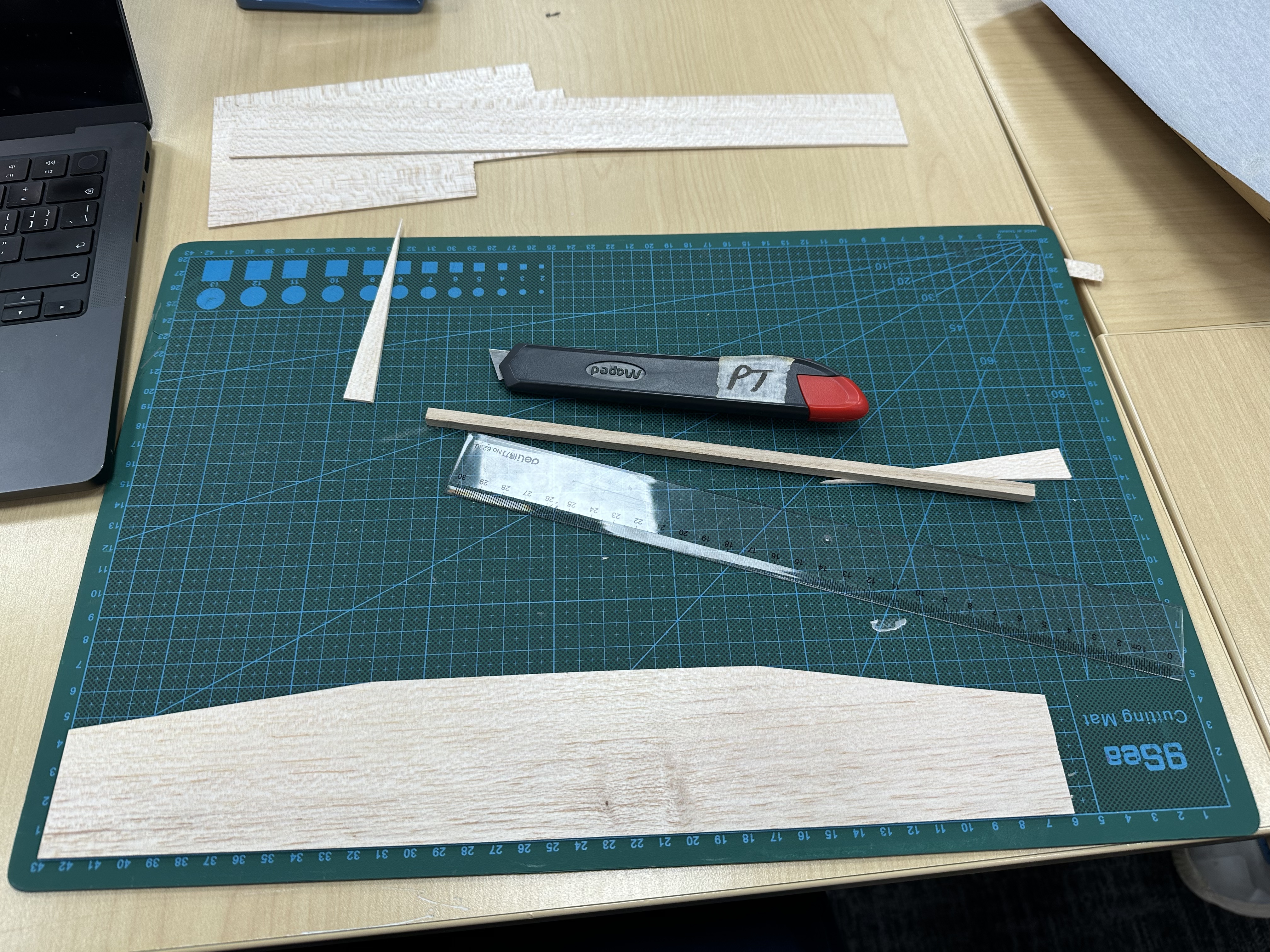
Figure 14: The Wing
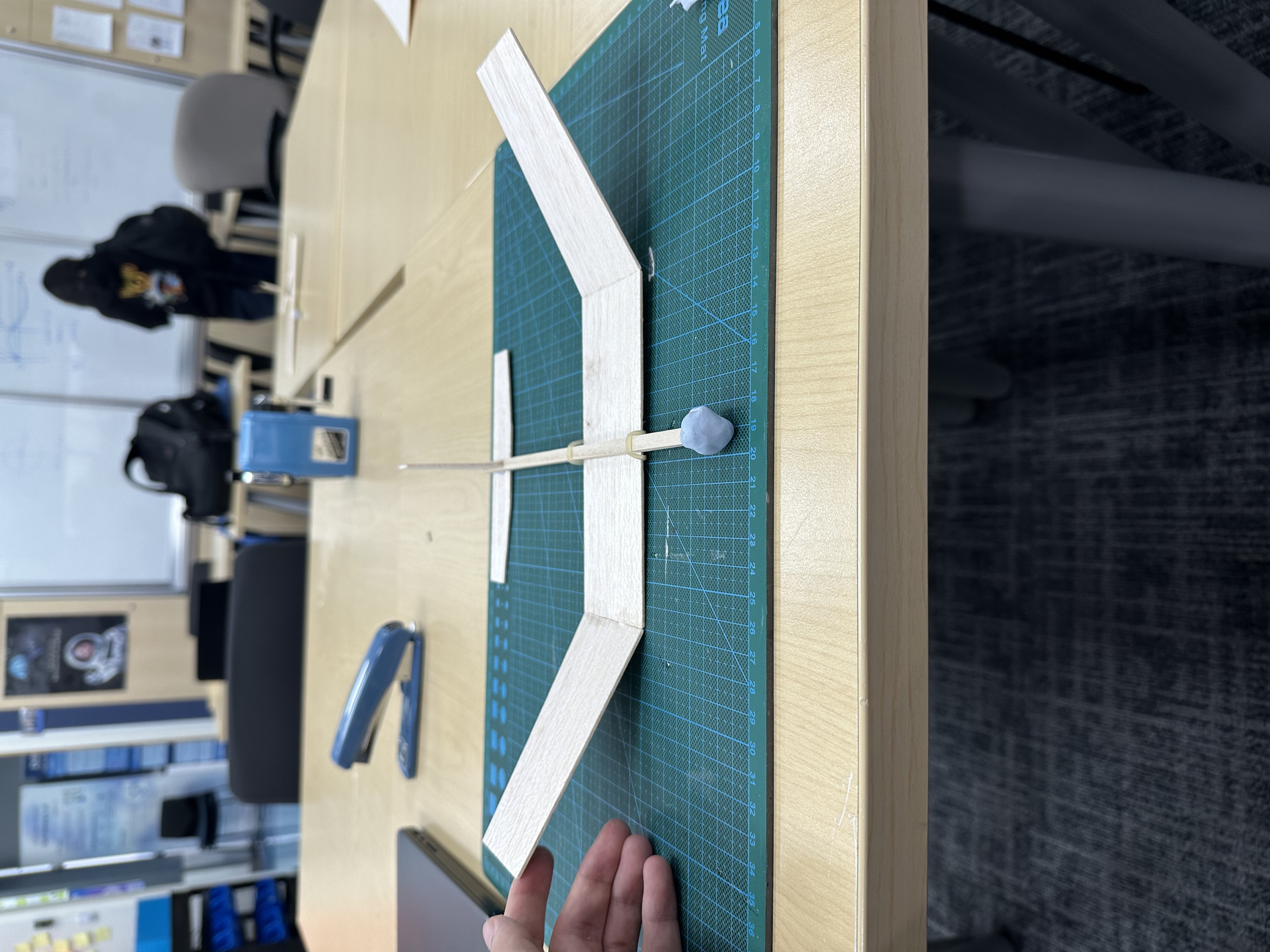
Figure 15: Front View
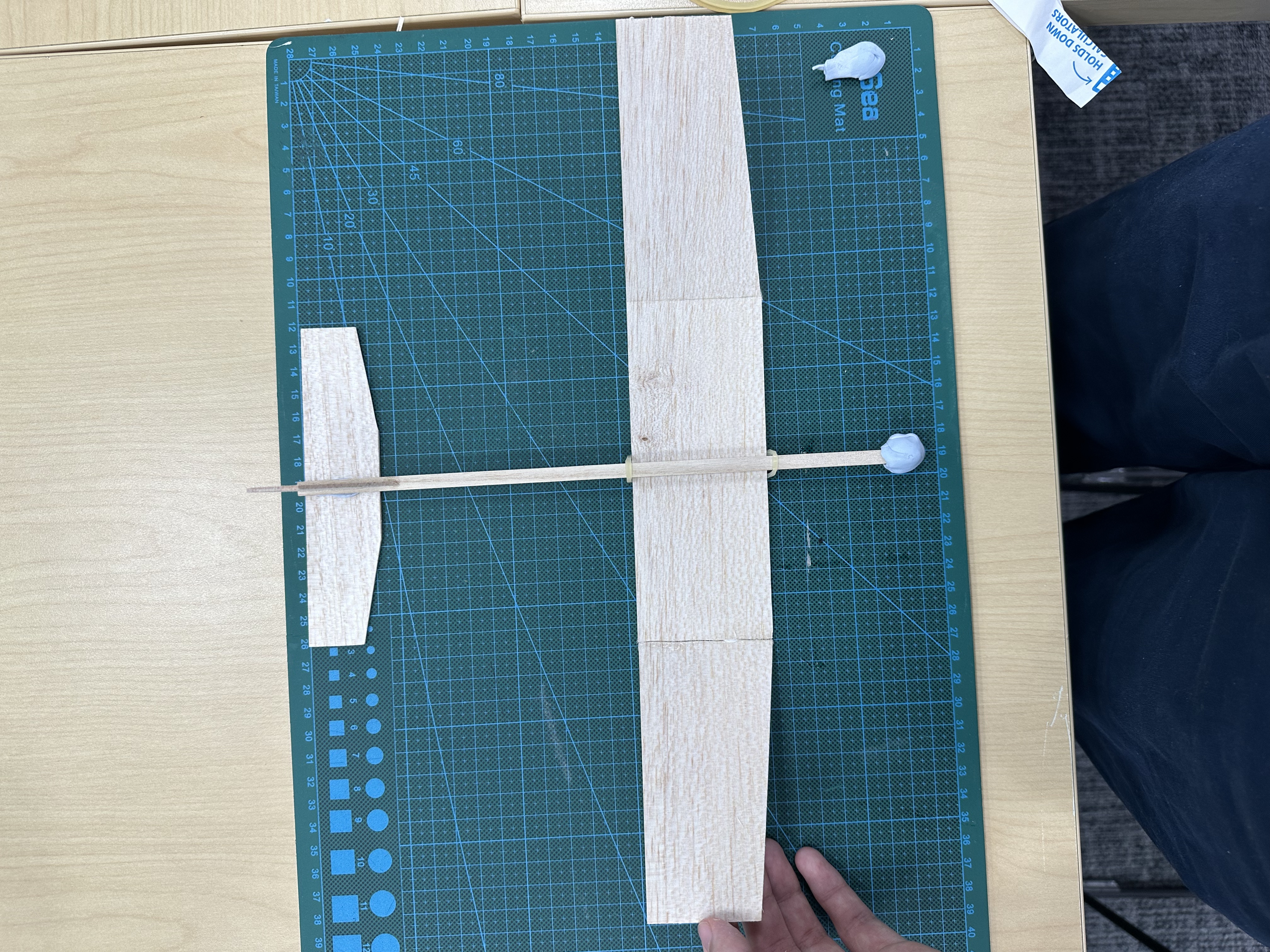
Figure 16: Top View
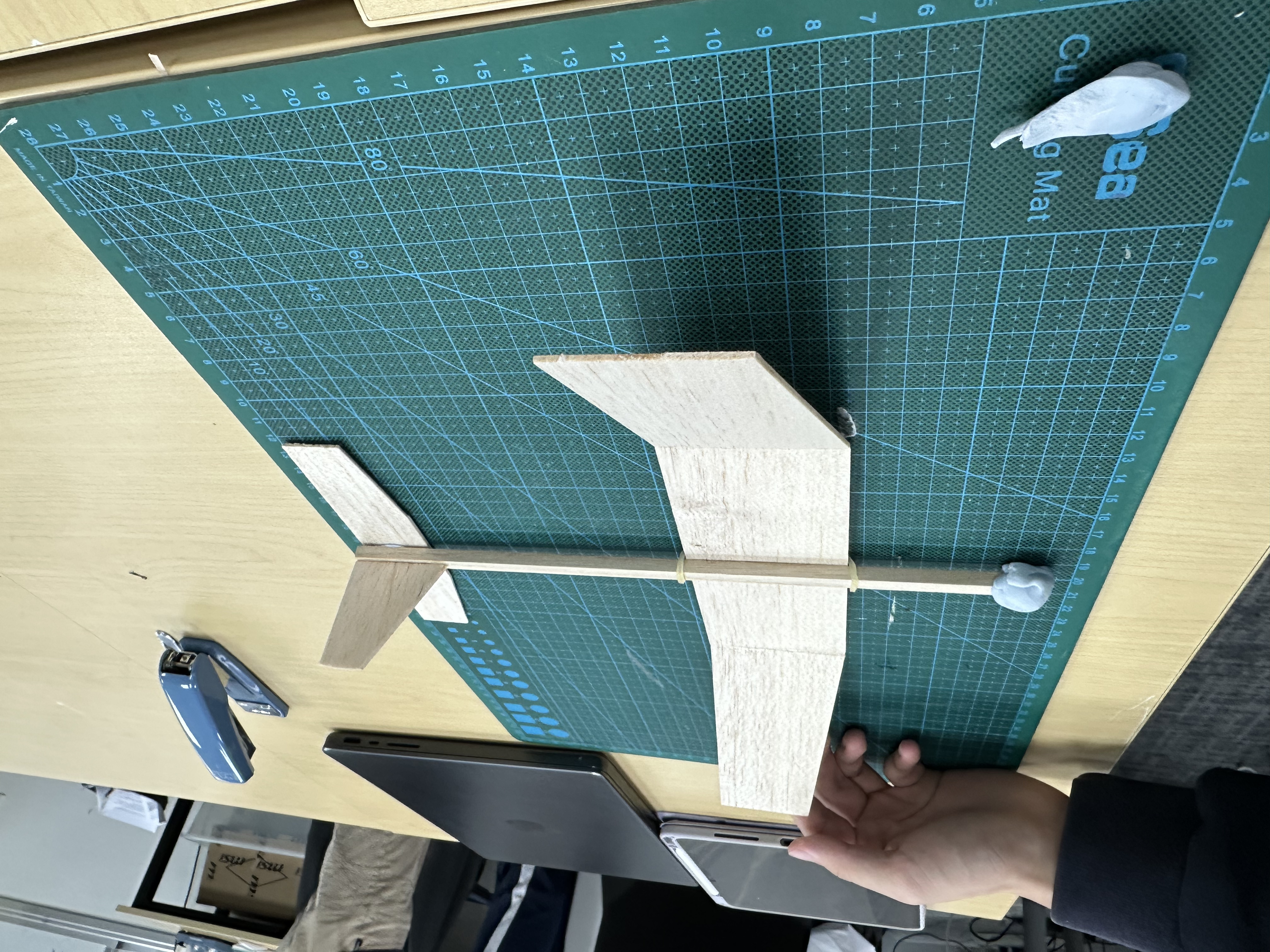
Figure 17: Side View
Final Trail
Video 1: Recording of trajectory
Observed Flight Behavior
The glider descended steeply from the launch point and drifted a left turn laterally.
Probable Causes
- CG too far forward: excessive down-pitching moment.
- Asymmetric wing geometry or warp: if one wing has slightly more incidence or drag than the other, it induces a rolling moment that leads to a turning trajectory.
Improvements
- Shift CG slightly aft: remove a small amount of weight (Blu-Tack) at the leading edge so the glide angle flattens out.
- Check wing symmetry: check and make sure both wings have identical dihedral, incidence, and no warping.
Comparison
Through comparison with other aircraft, weight was also identified as a non-negligible factor. Referencing Andy’s aircraft, which weighed approximately 4 grams, my aircraft weighed 12 grams, three times heavier. A higher mass increases the wing loading, requiring greater airspeed to sustain level flight. At the same launch velocity, the heavier aircraft loses altitude more rapidly, resulting in a steeper glide path and shorter flight distance.