This is an assignment on timeline in aerospace for the AL Aerospace Engineering course at Concordia International School, conducted by Dr. Peter Tong (aka D.T). I chose this topic because I am interested in how spacecraft survive in extremely harsh environments and how engineering technologies improve over time. I also wanted to study how materials changed across different stages of space exploration, because the evolution of spacecraft materials reflects the evolution of aerospace engineering itself.
Material is an essential and interesting part of the design of a spacecraft. Unlike aircraft, which are transportation vehicles that fly in the atmosphere, spacecraft often confront much more extreme conditions, such as low temperatures, cosmic radiation, and low pressure. Therefore, material design plays an important role in spacecraft construction; we must make sure spacecraft are safe from that dangerous environment. As shown throughout this timeline, each generation of spacecraft materials was developed to solve a different engineering problem.
To find my information, I used mainly reliable aerospace and educational sources, especially NASA materials, articles about spacecraft thermal protection and shielding, and general engineering references about aerospace materials. I searched for information by focusing on key material systems then organized them to show how spacecraft materials evolved in response to new demands. The development of materials is not completed in one run, instead, it has evolved several times, from concepts to real designs. This also refers to the history of spaceflight as also the history of solving different newly found physical limits. In other words, every major material appeared because engineers faced a serious problem and needed a better way to survive it.
The first thing, which is also the fundamental system used in early spacecraft, was the Whipple shield, which was invented in 1947. In outer space, there are thousands and millions of orbital debris that are flying at a significant high speed, around 7–15 km/s. At this scale of velocity, even a tiny piece of a micrometeoroid can destroy the entire machine by simply striking its surface. Solving this difficulty, instead of using only one thick wall, they use a thin outer layer first, so tiny particles break apart before hitting the main wall. This idea is very powerful since it does not simply add more mass, so it does not affect the weight and make the launch more difficult. As shown in Fig. 1, the Whipple shield works by using an outer bumper layer to fragment incoming particles before they hit the inner wall.
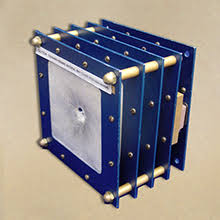
[Fig. 1. Whipple Shield Concept]
From the 1950s, aluminum alloy became a standard structural material for many spacecraft. However, it had already been invented since the 1900s, but the usage in spacecraft was implemented at that time. It has a lot of advantages over other metals; it is light, strong, and relatively easy to build with. Because of that, although it is not perfect, even today it is still widely used because of its high reliability and the established supply chain behind it. This shows that spacecraft materials do not always change by complete replacement, as sometimes older materials remain important because they are more practical to produce in industry.
Another key material system is multi-layer insulation (MLI), a silver blanket-like cover on spacecraft. The main problem is not limited to the coldness in outer space, but the repeated cycling between hot sunlight and cold shadow. Indeed, MLI helps reduce radiative heat transfer, which keeps spacecraft systems more stable. As shown in Fig. 2, MLI is wrapped around many spacecraft surfaces to control temperature in space.
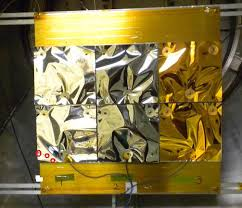
[Fig. 2. Multi-Layer Insulation (MLI) on a Spacecraft]
In real cases, one spacecraft might need multiple thermal materials at the same time. Silica tiles protected many surfaces, while reinforced carbon-carbon (RCC) was used in hotter areas like the leading edges at the same time. They were all invented in the latter half of the 20th century and promoted further development and research in modern Aerospace Materials Science. Fig. 3 shows an example of this idea, because different parts of a spacecraft or space shuttle require different materials depending on how much heat they experience.
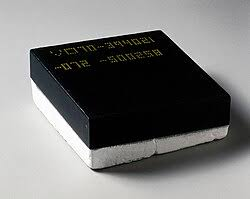
[Fig. 3. Space Shuttle Thermal Protection Materials: Silica Tiles]
After a period of time, a modern material system, PICA (Phenolic-Impregnated Carbon Ablator), was invented, which shows why ablative materials are still essential. For high-speed reentry, some missions need a material that can char and slowly burn away to carry heat away from the vehicle. As shown in Fig. 4, PICA is especially important for modern reentry missions because it can survive extremely high temperatures while protecting the spacecraft underneath. This development continues in the 21st century, and there are still massive problems waiting for solutions.
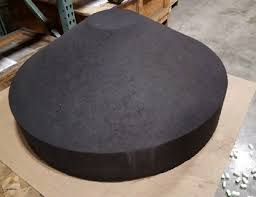
[Fig. 4. PICA Heat Shield Material for Reentry Vehicles]
From my findings, I learned that the evolution of spacecraft materials is not simply seeking technically best ones. Instead, it is a process in which each material is developed to solve a specific problem, such as structural weight and temperature control. I also learned that modern spacecraft do not rely on one perfect material, instead they usually combine multiple materials and protection systems together. This made me understand that material science is one of the most important foundations of aerospace engineering.
References
Christiansen, Eric L. MMOD Protection. NASA, 2018, NASA Technical Reports Server, ntrs.nasa.gov/api/citations/20190001193/downloads/20190001193.pdf. Accessed 22 Mar. 2026.
“Orbiter Thermal Protection System.” NASA, Kennedy Space Center, n.d., www3.nasa.gov/centers/kennedy/pdf/167473main_TPS-08.pdf. Accessed 22 Mar. 2026.
“Phenolic-Impregnated Carbon Ablator (PICA) Heat Shield Technology Is Used by SpaceX.” NASA, 2 July 2015, www.nasa.gov/image-article/phenolic-impregnated-carbon-ablator-pica-heat-shield-technology-used-by-spacex/. Accessed 22 Mar. 2026.
“Shield Development: Basic Concepts.” NASA HyperVelocity Impact Technology, Lyndon B. Johnson Space Center, n.d., hvit.jsc.nasa.gov/shield-development/. Accessed 22 Mar. 2026.
“The Editors of Encyclopaedia Britannica.” “Spacecraft.” Encyclopaedia Britannica, 21 Feb. 2026, www.britannica.com/technology/spacecraft. Accessed 22 Mar. 2026.