Main
Nowadays, Big Data is almost everywhere. From the social media we use every day like TikTok or Youtube to the huge industries of healthcare, finance, and transportation, Big Data is reshaping the world. However, the reason Big Data is important is not because of its massive quantity or its speed of processing, but because it can be transformed into useful outcomes. It means that the most important core concept of Big Data can be concluded into one word of “Value”. Without value, Big Data is nothing more than a group of wastes.
Data itself is not wealth. What truly makes data powerful are the results it can bring. Imagine that a company stores hundreds of millions of pieces of customer information, but if it does not have the ability to extract useful contents from them, such data is merely a cost rather than an asset. For example, the user data of Youtube generates at a extremely high speed. It helps a lot to push Advertisements (ADs) or related contents that users are interested in only if Youtube can analyze it formally and correctly. Only when data can help a company improve decision making or enhance customer experience does it truly realize its value.
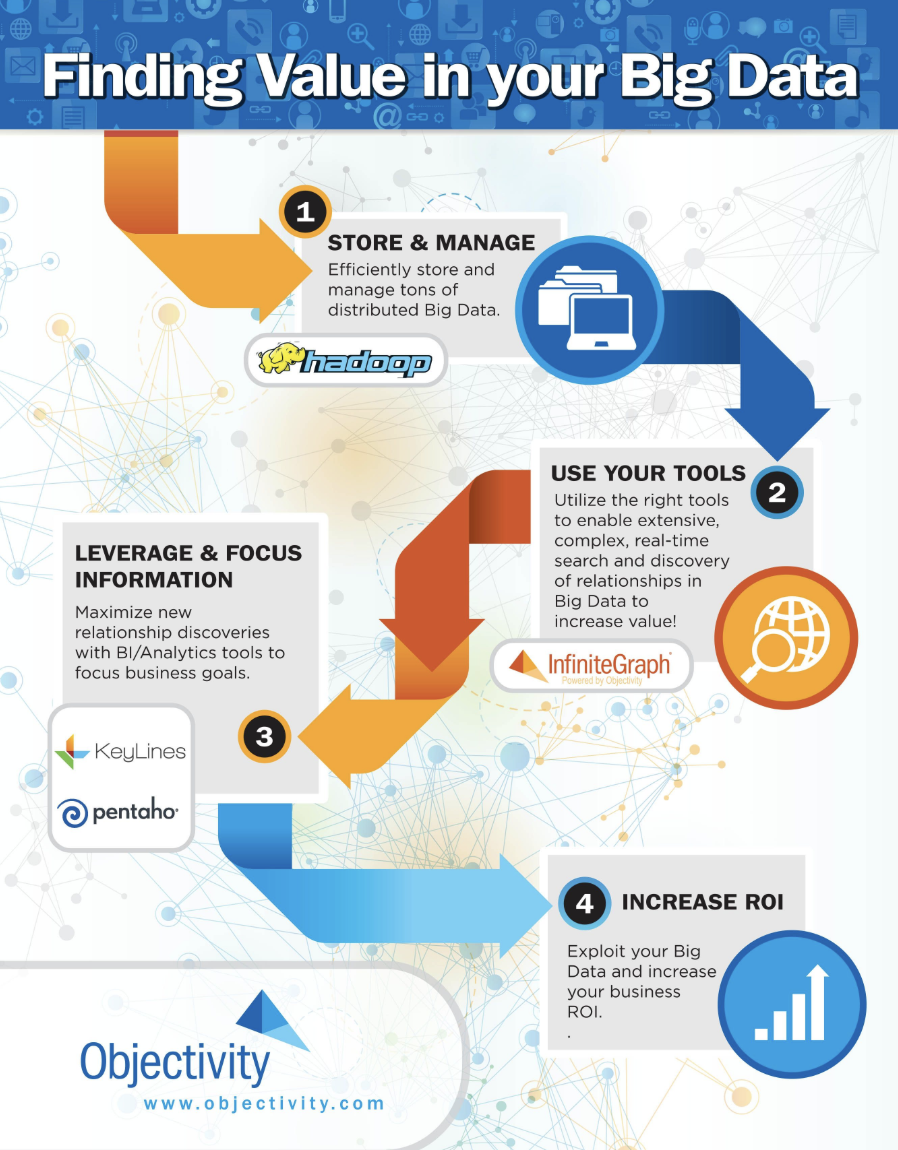
This picture is a infographic that shows the steps to analyze data, which explains how Big Data becomes valuable. It starts with storing and managing massive amounts of data, because without storage there is no foundation. Although this graph mentioned that, it is not the most important part. Then it shows that analytics tools are used to focus information and discover new patterns, which helps connect data with business goals. The next step is to use the right tools to search and find relationships in real time, so the data is not just numbers but useful knowledge. Finally, the picture highlights that the true purpose is to increase ROI, which means creating real benefits for the business. This proves why Value is the most important V in Big Data. For every step, from storage to analysis, only makes sense if the data finally creates value.
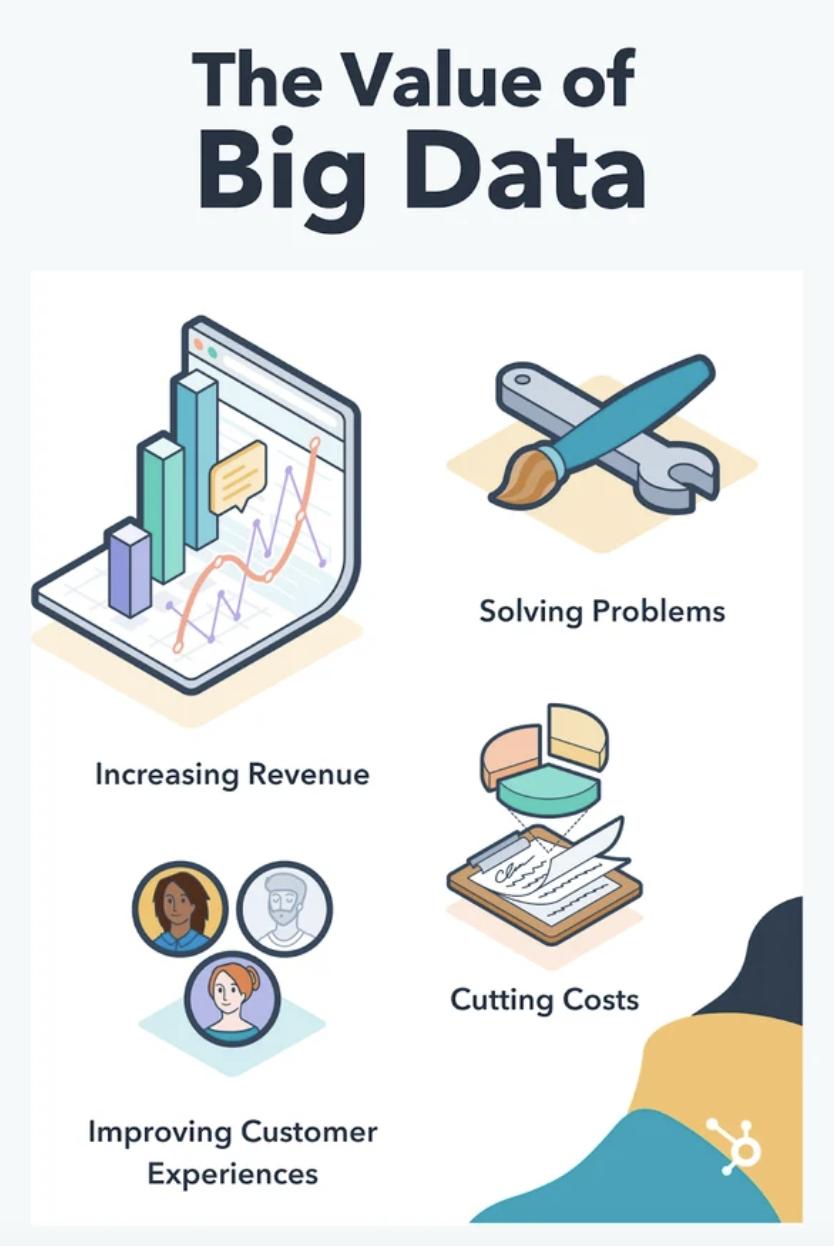
This picture shows the real outcomes of Big Data: solving problems, increasing revenue, cutting costs, and improving customer experiences. These outcomes are all about Value. Data by itself cannot achieve anything unless it creates benefits like these. Solving problems gives value by making decisions easier, increasing revenue gives value by growing the business, cutting costs gives value by saving resources, and improving customer experiences gives value by keeping people satisfied. Producing value is the basis of anything else. If a dataset contains no value, it is useless to do anything.